Mar 26 – Rolling Surf and Beach Rocks, Bathsheba, Barbados
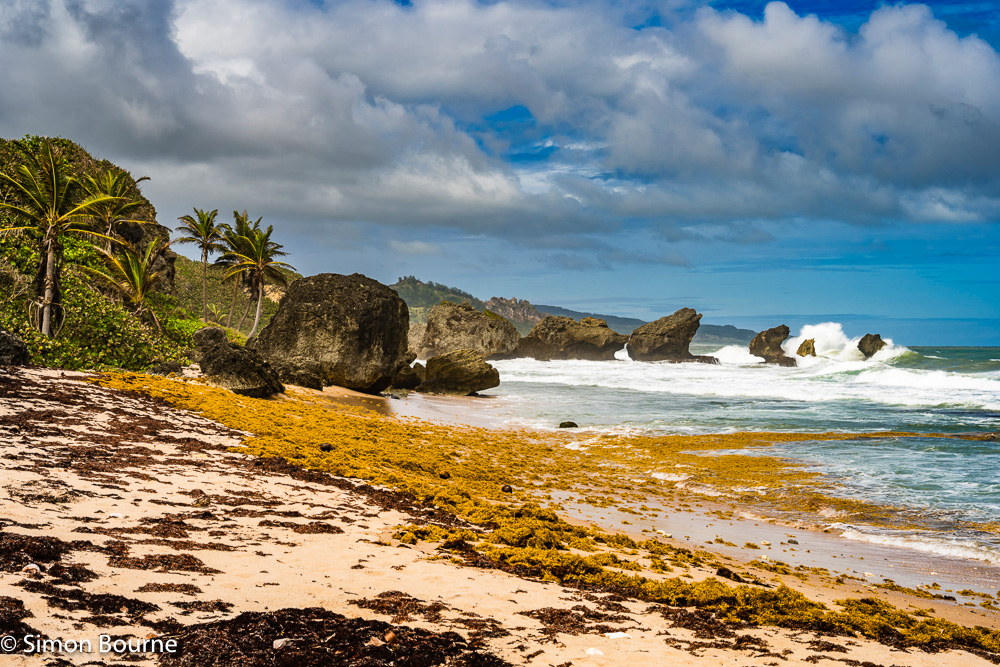
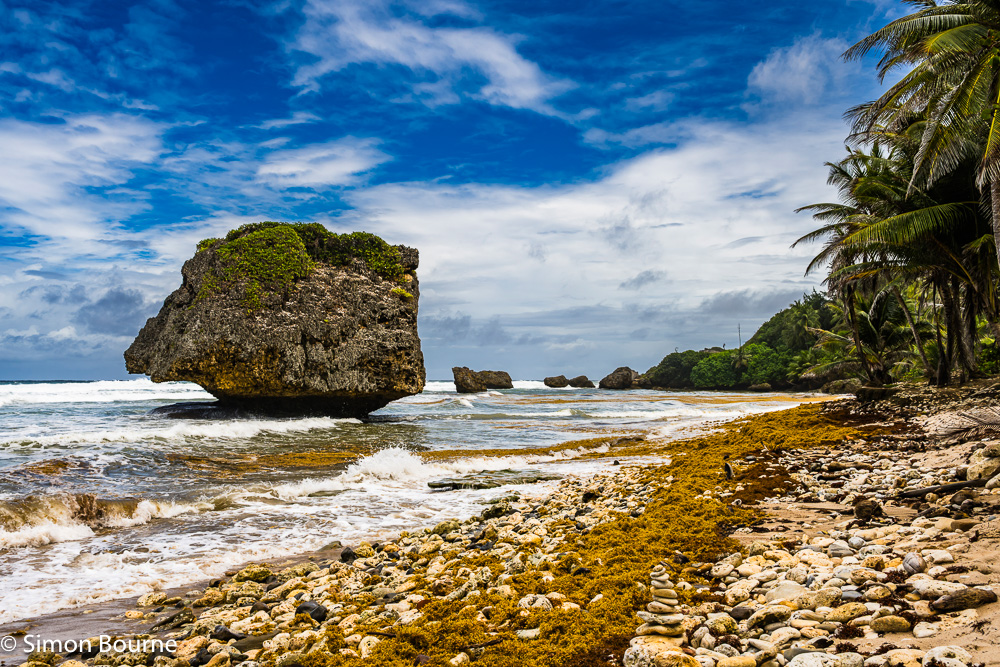
As noted in my last blog, the East Coast of Barbados, ie the Windward Side, is much more dramatic with its Atlantic Ocean winds and rolling surf. These two shots are taken in the quiet fishing village of Bathsheba, which is famous for its large coral limestone rock formations on the beach. They look spectacular with waves crashing over them.
Unlike the other nearby islands in the Lesser Antilles or Windward Islands, Barbados is not volcanic but a karstic limestone island that has been pushed to the surface as the Atlantic tectonic plate pushed under the Caribbean plate. The younger (<1m years) limestone is up to 100m thick above a base layer of softer, and much older (~50m years), sedimentary deposits, known as the Scotland Group. At Bathsheba, the softer foundations of the older group in the cliffs has toppled lots of younger limestone boulders towards the sea. With further erosion for the Atlantic, these mushroom-shaped boulders form, also known as olistoliths.
The first photo is a wider view of the surf breaking on these boulders, but actually taken at 52mm on my Z 24-120mm f/4 S using f/11, 1/250s and ISO 100. The second picture is a closer view of one of the massive rocks, but actually taken at a wider angle of 31mm, using the same settings otherwise. Besides my usual Lightroom settings, both used a WB of 6,250K and I held the sky back with a mask by 0.6 stops.
On to St Vincent and the Grenadines next!
Mar 26 – Lush, Green and Floriferous Tropical Gardens, Barbados
The West Coast (the Leeward Side) of Barbados is pretty flat and busy, with lots of hotels, but not actually any large sandy beaches, whereas the East Coast (the Windward Side) is much more dramatic and sparser, with rolling Atlantic waves and surf. In the middle, though not too high up (it only peaks at 336m), it is very lush and green.
We visited three tropical gardens here at Welchman Hall Gully, the Flower Forest and Hunte’s Gardens. At Welchman Hall Gully, which is a naturalistic walk through a long, collapsed limestone cave, it was raining heavily and so very difficult to get any decent photos. By the time we got to the Flower Forest though, it was just brightening up, and then it was lovely and sunny by the time we walked around the wonderful Hunte’s Gardens. They are all quite close to each other, about halfway across the island.
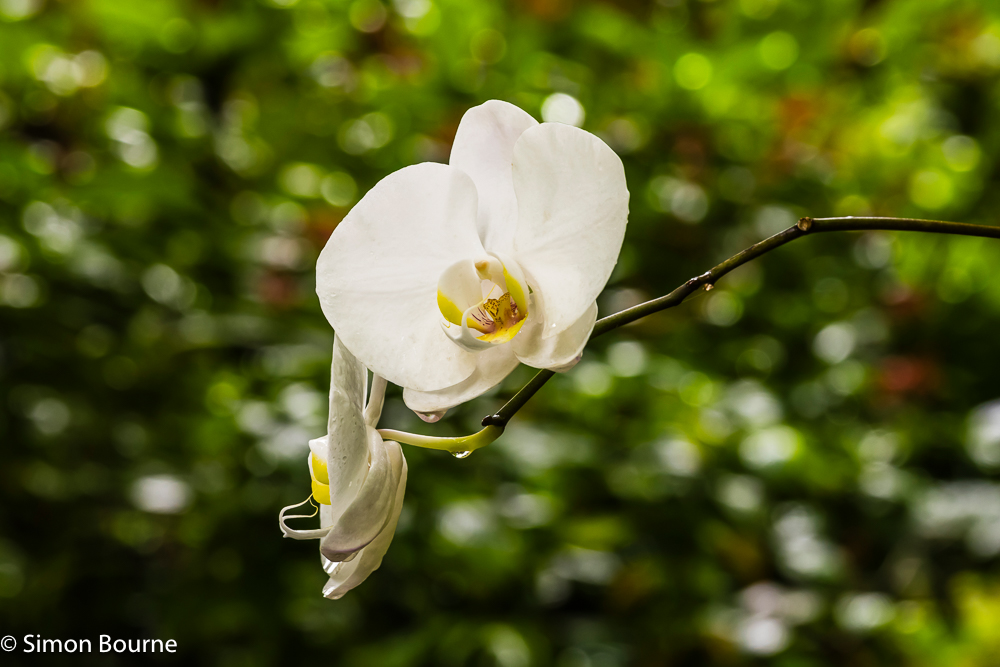
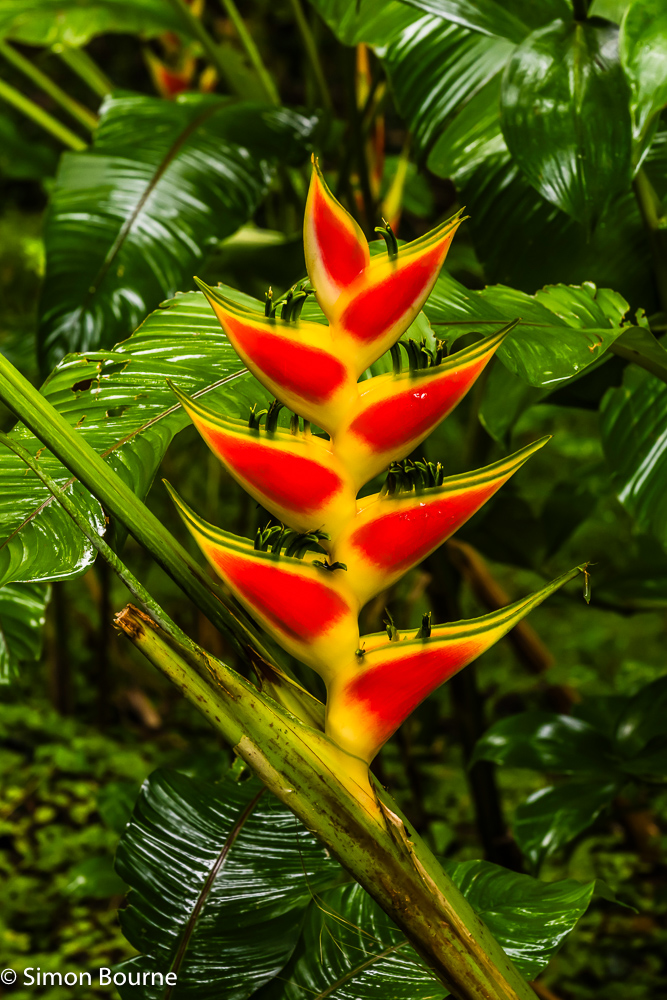
These first two close-ups were at the Flower Forest Gardens, which cover over 50 acres in the tree tops. The white Orchid (Phalaenopsis) was taken at 100mm on my Z 24-120mm f/4 S using f/8, 1/100s and ISO 400 due to the shady conditions, while the fantastic red and yellow Lobster Claw Heliconia (Heliconia bihai) used 105mm, f/9, 1/100s and ISO 400. You can see how much they are both covered in water drops from the rain.
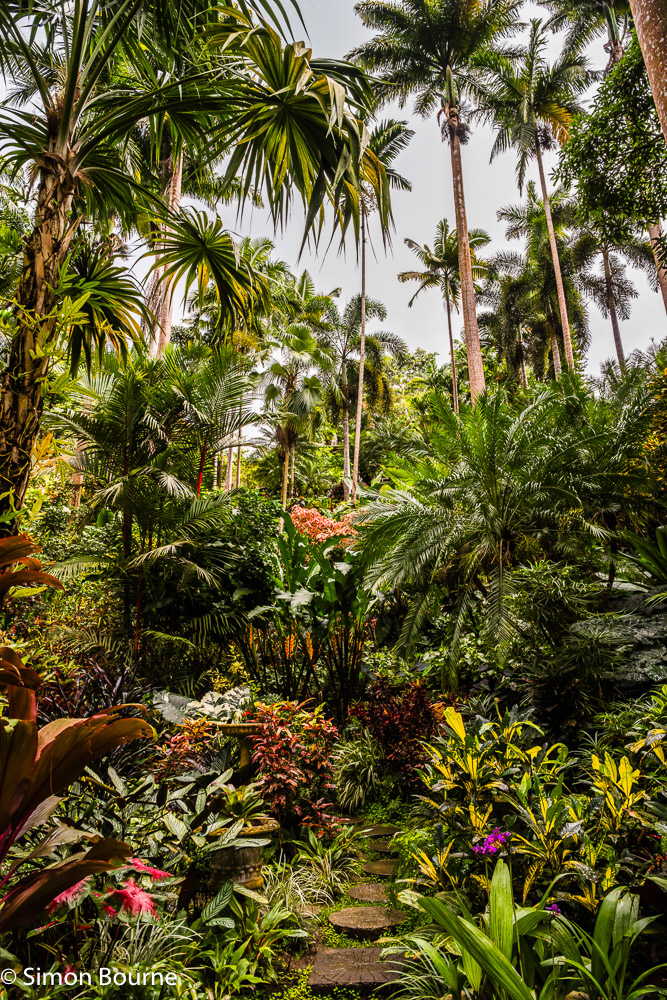
Hunte’s Garden is much smaller at just over 2 acres and is more cultivated. It has been created inside a limestone sink hole, ie a collapsed cave too. The area was originally a sugar cane plantation but has been transformed in to tropical gardens since 1990. Besides the flowers, especially the red Anthuriums, its main feature is the very tall array of palm trees, making it quite tricky to get their full height in to shots that also show the ground displays. This third image was taken at 24mm, f/11, 1/125s and ISO 200.
Feb 26 – Tropical Sunset over the Caribbean, Barbados
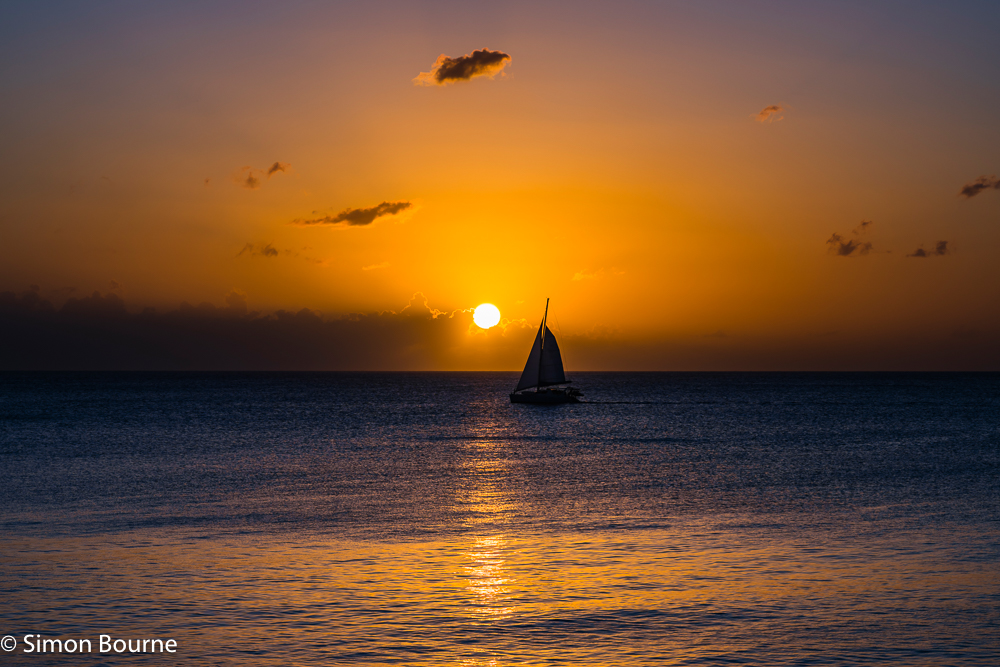
What’s not to love about a 30oC temperature during the day and still 25oC at night, and right in the middle of the “dry” season – best way to beat the cold, wet and windy weather in Cornwall at this time of year. These views are looking out over the Caribbean from the West Coast (the Leeward Side) of Barbados at Prospect Bay. It’s only 13 degrees North of the equator here, with the sun setting around 6pm on most days – it actually only ever varies between 5.30pm and 6.30pm over the whole year.
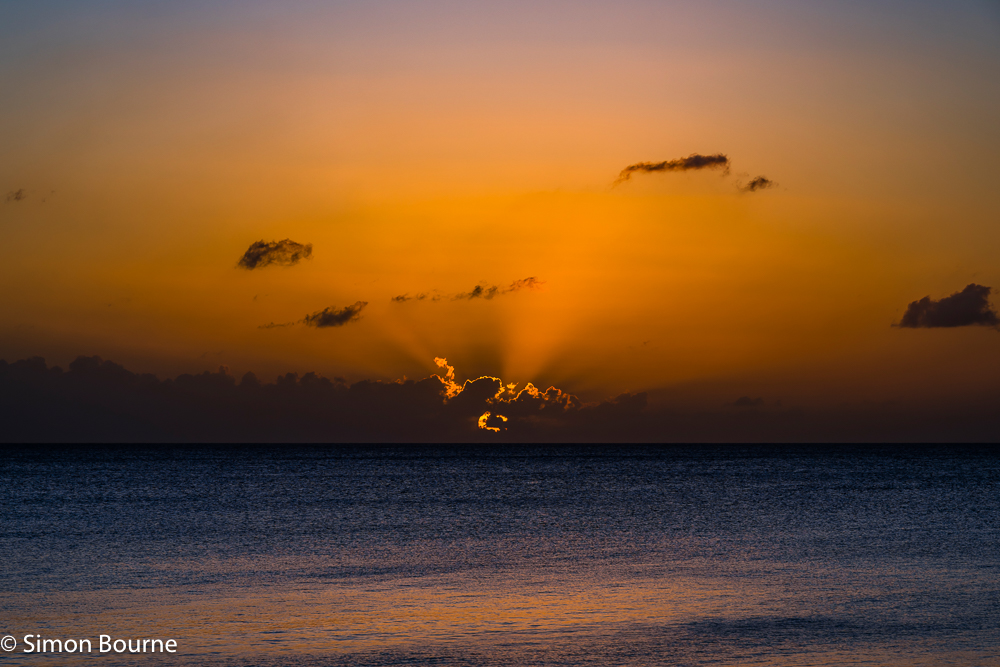
The first image was 6 minutes before the sunset, just before it dipped in to the thin layer of cloud over the sea. The reflections on the calm waters were still good and there were a number of yachts passing by to add some further interest. I used my full-frame mirrorless camera, the Nikon Z 7II, with the very versatile Z 24-120mm f/4 S lens, which is great for travel and landscape photography, using it at 80mm, f/11, 1/125s and ISO 64. The best WB was at 4,500K and I held the sky back by 0.4 stops to increase the drama.
Then, 4 minutes later, with the sunset just a couple of minutes away (it sets much quicker nearer the equator, of course), the sun had partially dropped behind the clouds. The reflections on the water were gone but replaced by the wonderful spread of the crepuscular rays in to the sky. It was immediately one stop darker and so I opened up the settings to f/9 and 1/100s while keeping the ISO at 64 – the focal length was also a little tighter at 95mm. Now, I found the better WB to be 5,000K, while I hardly held the darkening sky back at all, just by 0.1 stops.
More tropical delights to follow!
Feb 26 – The Majestic Lake Pukaki and Mount Cook, New Zealand
At last, with my hip now fully on the mend, I have got to the end of processing my New Zealand shots from last year! Next images soon to be posted will be from Barbados and St Vincent, from where we have just returned – proper tropical heat there to wave away any winter blues in February.
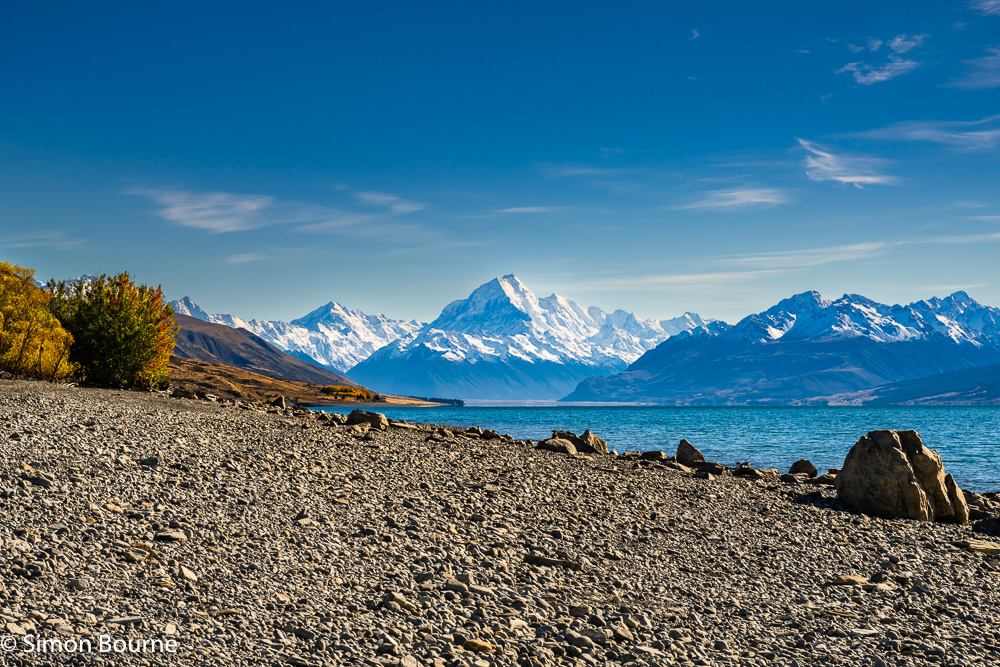
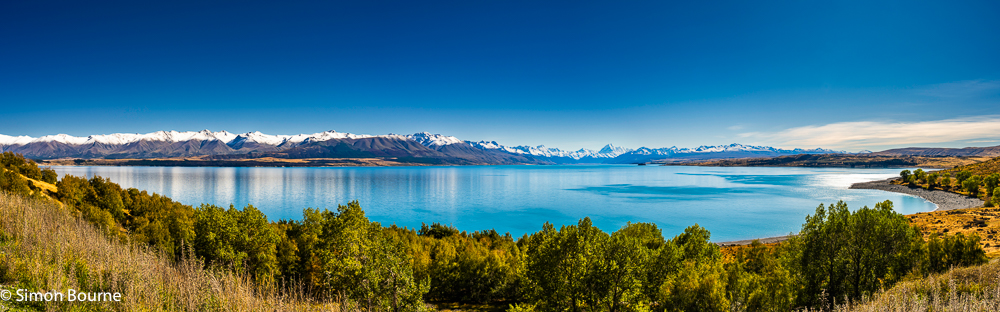
These last two photos were early morning as we left the Mount Cook National Park on our way back to Christchurch. The autumnal day was clear and crisp with fresh snowfall on the mountain peaks. Lake Pukaki picks up the melt waters from the Tasman, Hooker and Mueller Glaciers, as they join in to the Tasman River flowing in to the lake. The terminal moraine from the retreating glaciers blocked the valley allowing the lake to form. Its stunning green/turquoise to blue/aquamarine colours are the result of the glacial rock flour in the waters.
In the first image, by the shores of the lake, we could clearly see Mount Cook (3,724m) with the slightly lower Mount Tasman (3,497m) on its immediate right. It was the clearest long view that we had ever had of those peaks during both our trips to New Zealand. This was taken at 70mm on my Z 24-120mm f/4 S lens using f/14, 1/160s and ISO 64.
The final panorama was taken right at the southern tip of the lake near Twizel, looking back to Mount Cook again, 70km away. What a view and what colours! This composite was created in Photoshop from four merged Lightroom pictures, each taken at 28mm, f/13, 1/125s and ISO 64. The net result is a shot 14,100 by 4,400 pixels, ie 62MP – perfect for an exhibition-quality print around 180cm wide. Besides my usual Lightroom adjustments, both images used a WB of 7,000K and I held the sky back by 0.9 stops.
Jan 26 – Northern Lights over Tintagel Island, Cornwall
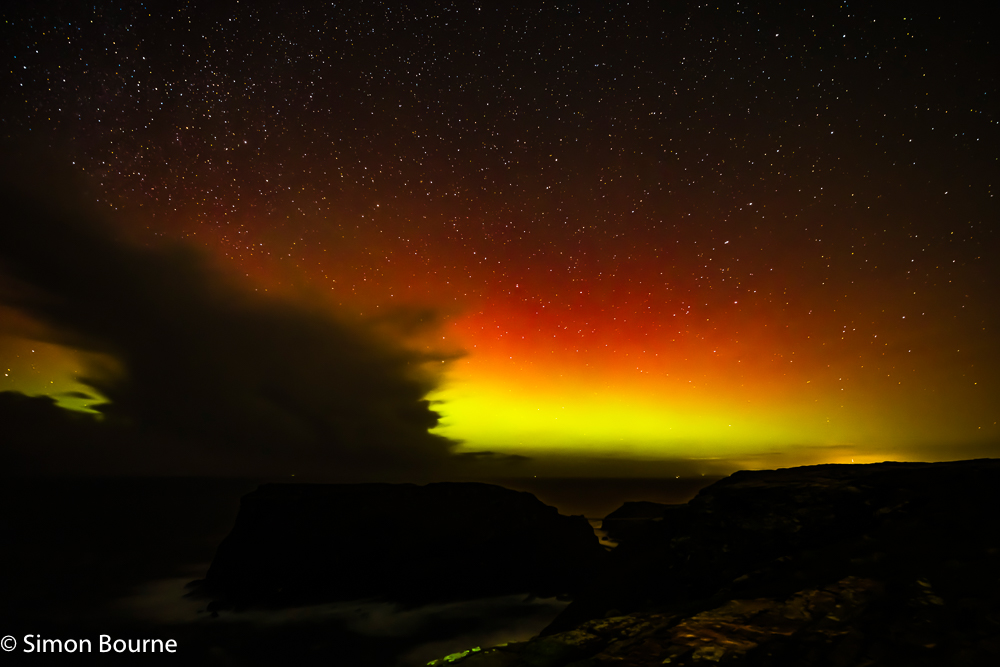
There were a number of occasions last year when solar flares produced northern lights (Aurora Borealis) even as far south as here in Cornwall, and yet every time, it was cloudy! Last night though, there was a reasonably good solar storm (a G3 category, following an X-class solar flare and coronal mass ejection (CME) on Monday), with geomagnetic field variations of about 800nT (nanoTesla) – typical field variations are less than 50nT. The sun is close to a solar maximum at the moment, which means a greater intensity of CMEs and solar storms, over an 11-year cycle.
The actual colours depend on whether the emitted plasma of electrons and protons hits the nitrogen or the oxygen in the sky, and at what altitude. Green is the most common in proper northern climes, as plasma hits oxygen atoms at 100-250km, but the colours here last night were definitely red, with a yellow-green glow beneath it.
Anyway, this shot was the best one, taken at about 9.30pm looking directly north across Tintagel Island from Glebe Cliff, just by St Materiana’s Church. It was mostly clear skies, though there was one block of dark cloud in the shot. You can see The Plough asterism (in the Ursa Major constellation) to the right, with its top leg pointing towards Polaris (the North Star), which is in the middle of the frame, right at the very top.
I used my Z 14-30mm f/4 S lens at 16mm with f/4, ISO 1600 and a 30s exposure – this is an EV of -5. With the naked eye, all you could see was a faint brightness, but the camera’s sensor clearly picks up way more light and colour. You then also have to use a fair amount of further adjustments in Lightroom to make the image really stand out!
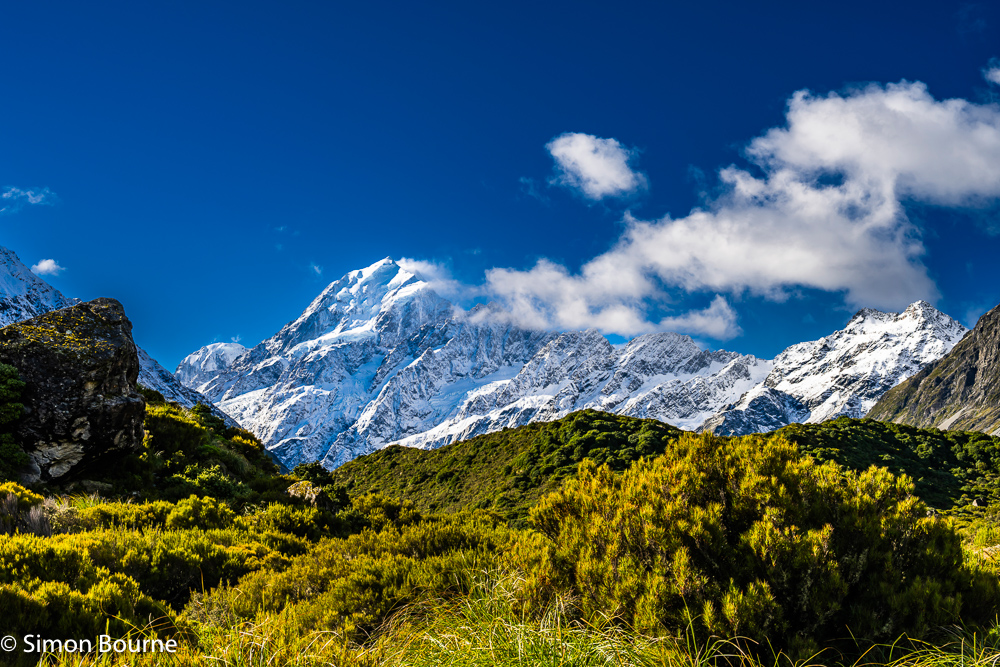
Jan 26 – The Wonderful Aoraki/Mount Cook, New Zealand
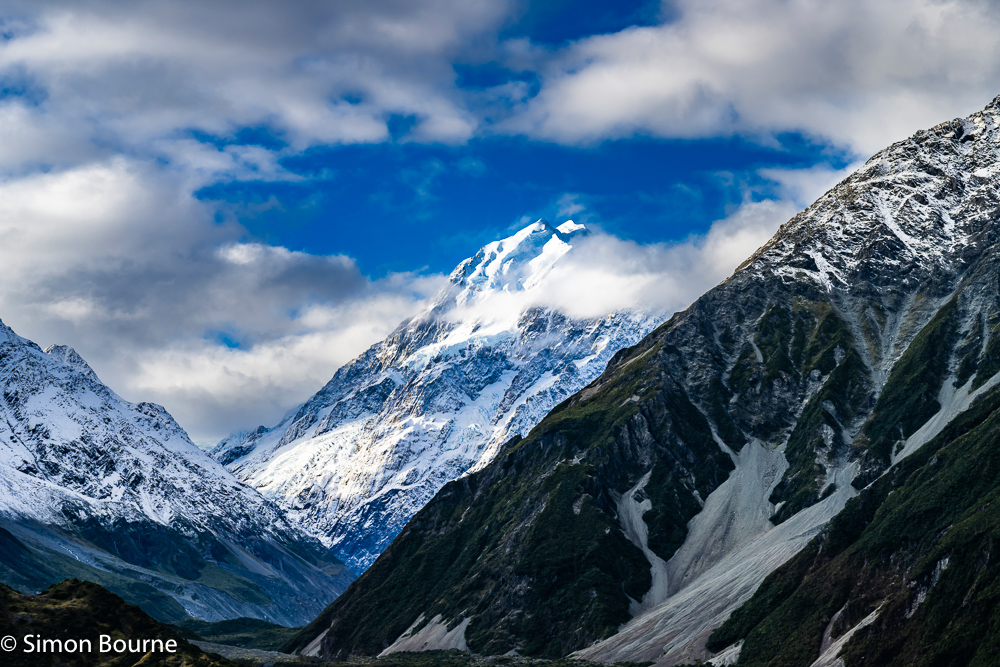
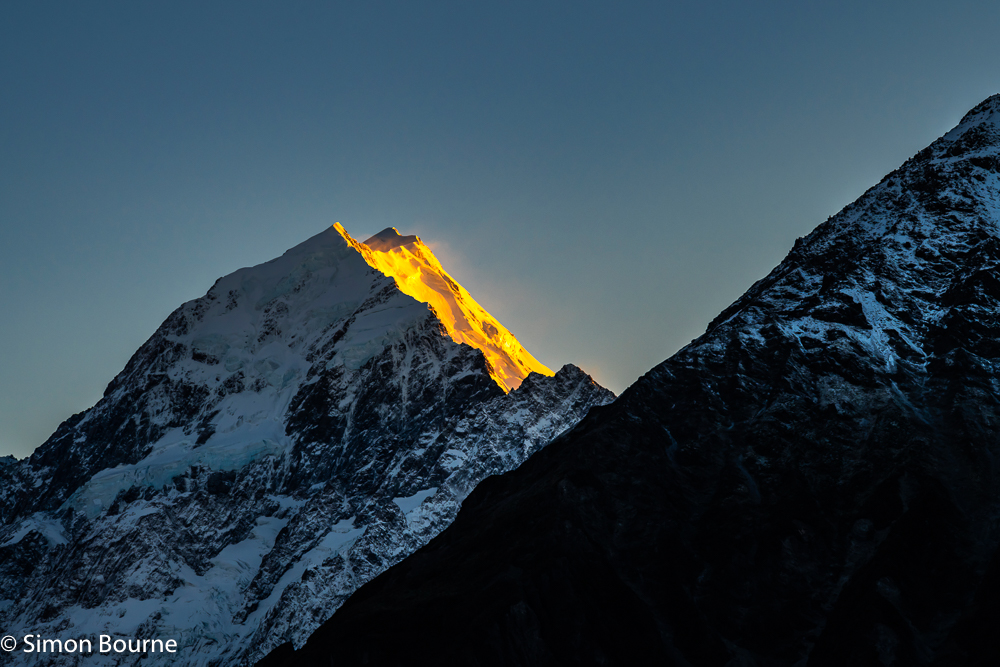
Last time we were in New Zealand in 2019, we didn’t really see Aoraki/Mount Cook at all, as it was bathed in the clouds nearly continuously. This time though, we saw it in all its 3,724m glory, mainly all on the same day!
This first wider shot was taken coming back from the Hooker Glacier in mid-afternoon, using 39mm, f/11, 1/125s and ISO 64. You can see the front peak and the higher rear peak is just about visible in the clouds. The second image is zoomed in at 73mm a few hours later at 5pm, as we passed the Mueller Glacier lake. The highest peak is now clearly visible. This was taken at f/9, 1/125s and ISO 100.
Finally, the best photo though was from our hotel at 7am the following morning, with a clear frosty start, no clouds and fantastic light on the snowy peaks. Over around 20 minutes, the light on the mountain tops went from red to orange to yellow. This image was the orange phase taken using 120mm, f/8, 1/100s and ISO 200. The natural WB was higher here at 8,000K and I only held the sky back by 0.5 stops. Then, besides my typical adjustments in Lightroom, I didn’t need to modify the colours much at all – it was exactly like that!
Jan 26 – Hooker Lake and Glacier, and Mount Cook, New Zealand
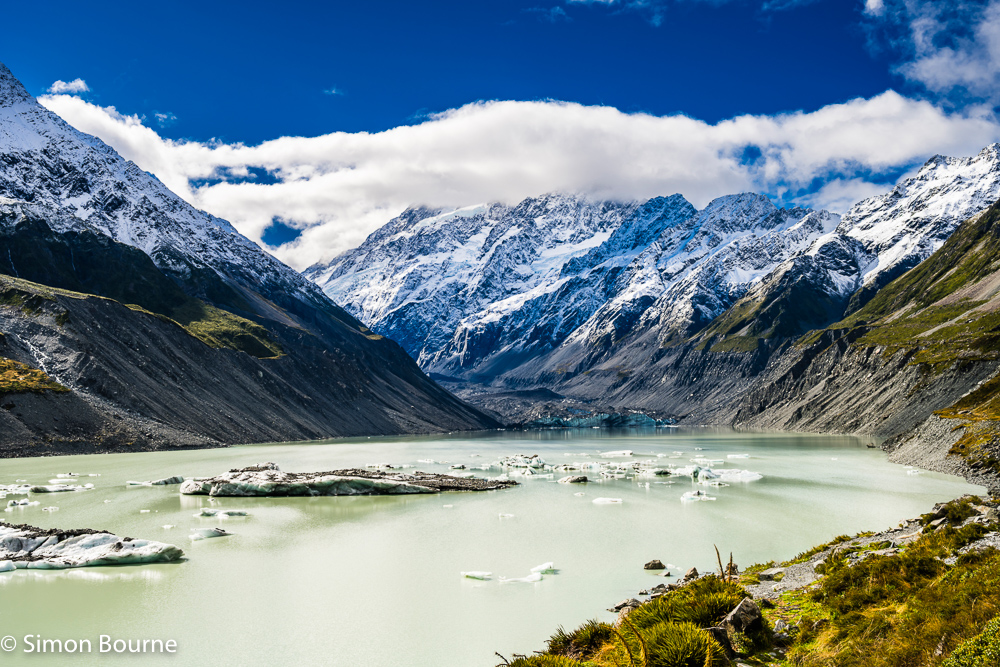
This was the trek that my hip went for first time – turned out it had become arthritic very quickly and after 2 hours walking, it was done for. Problem was the 2 hour hike back! So, I didn’t get as many shots around the Hooker Lake and Glacier that I had wanted, and Mount Cook was hidden in the clouds right up until we left. The Māori name for New Zealand is, of course, Aotearoa – “Land of the Long White Cloud”.
It was around midday when we got there and surprisingly busy with walkers – it took a while to remove them in Photoshop from my better images! Occasionally, I don’t mind the odd person to give some scale, but in general, I always remove people, as otherwise you start needing to get model releases for any images that you put on sale on Alamy. This shot is looking up the lake towards the 11km long Hooker Glacier, with its blue-green ice front covered in dark rock debris. Mount Cook/Aoraki is in the background with its peak at 3,724m just behind the top of those white clouds.
There were proper icebergs in the milky green waters of the terminal lake and the side moraine height shows how much the glacier has been retreating.
This shot was taken at 35mm on my Z 24-120mm f/4 S lens using f/13, 1/125s and ISO 64. The WB was best at 6,250K and I held the sky back by 0.9 stops. Fortunately, I got some better shots of Mount Cook a bit later – see my next blog!
Jan 26 – Mueller Lake and Glacier, New Zealand
On our walk up to the Hooker Lake and Glacier, where we got a great view of Aoraki/Mount Cook, we passed the beautiful Mueller Lake and Glacier. The 13km long Mueller Glacier is tucked up at the top of the lake and, like the lower sections of the Tasman Glacier, is covered in dark rock debris.
It was a stormy sort of day again, but with great shafts of sunlight poking their way through the dark skies – all very dramatic. The first autumn snows on the peaks added wonderfully to the whole scene.
The first shot was taken on my Z 24-120mm f/4 S lens at 24mm, f/10, 1/125s and ISO 80, with the glacier up on the far left corner of the milky green lake. The lake then forms the start of the Hooker River, which is flowing out on the bottom right corner of the image – this feeds in to the Tasman River, and on to Lake Pukaki.
The second photo is a panorama of five images across the lake, with the bluer aquamarine waters of Lake Pukaki on the far left, our hotel in the Mount Cook village also on the left, and the bottom of the Mueller Glacier on the far right. This merged photograph used a 24mm focal length, f/10, 1/125s and ISO 125. In addition to my usual Lightroom adjustments, I used a WB around here of 6,500K and held the sky back by one-stop to heighten the moody clouds.
On the full-size images, you can see the fine details of the blue ice on the mountain slopes above the glacier – not quite as visible on these much smaller resolution files used on my website!
Jan 26 – Tasman Lake and Glacier, New Zealand
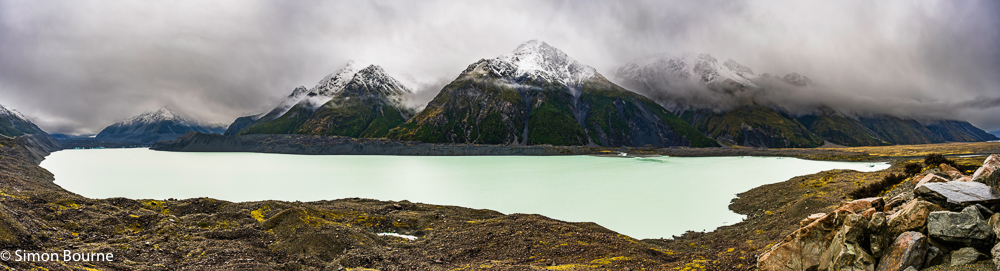
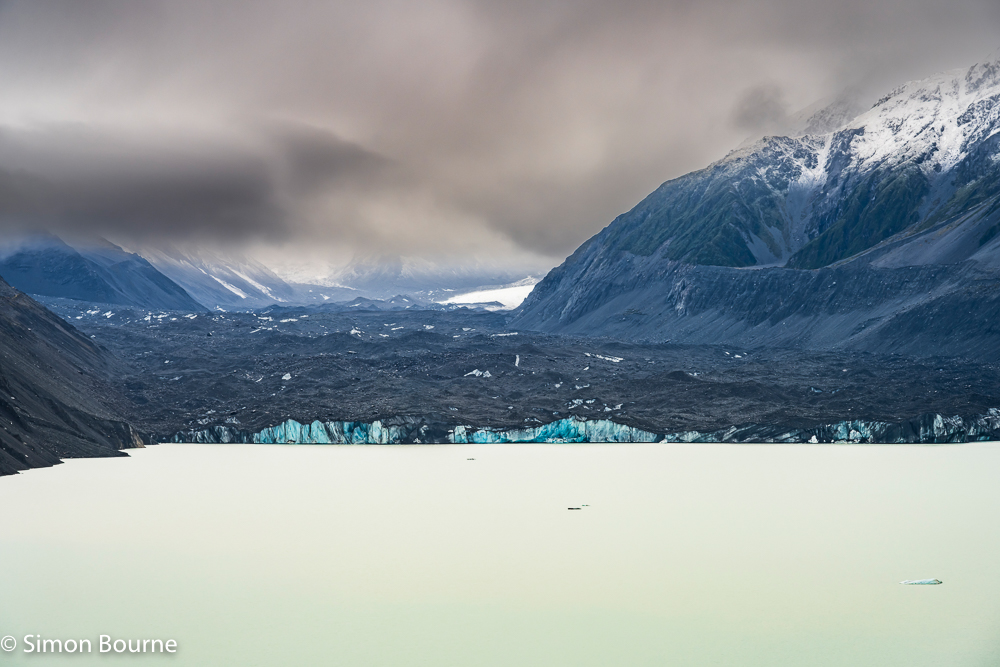
It stayed pretty wet and overcast all day, making the view over the Tasman Lake rather dull, but spectacular nevertheless. The Tasman Glacier to the left of the lake is the longest in New Zealand at around 24km. You can see the white icy top of the glacier further up the valley, while lower down by the lake, it is covered in dark rock debris.
This whole area is in the Mount Cook (Aoraki) National Park – Mount Cook itself (NZ’s highest peak at 3,724m) is behind the clouds to the left of both images. Fortunately, I got better pictures of that snowy peak a day later. The glacier feeds in to the Tasman Lake, which then flows down the valley as the Tasman River, before flowing in to the wonderful Lake Pukaki. At the higher levels, the waters are filled with glacial rock flour, which gives this very milky appearance. Lower down the valley as the flour settles, the waters become the greener turquoise or the bluer aquamarine, which is exactly what makes Lake Pukaki so spectacular.
This first image is a panorama of five shots taken on my Z 24-120mm f/4 S lens at 24mm, f/9, 1/100s and ISO 100, giving a final picture that is 18,100 by 4,900 pixels, ie 89MP. The first snows of autumn had happened overnight, which significantly improved the image, although much was lost in the low cloud. I was expecting the glacier to have retreated a lot since our last visit in 2019, but in comparing my photos, I couldn’t really see any huge difference. I believe the ice front has been quite stable for a few years now, whereas it was retreating by around 600m per year back in 2015.
The second photo is zoomed in to the glacier front using 120mm, f/10, 1/100s and ISO 100. The blue ice is now very apparent on the glacier wall, as are a small number of icebergs in the milky waters of the terminal lake.
Both pictures used a WB of 6,500K, together my usual range of adjustments in Lightroom, particularly to enhance the colours a tad more, and to dehaze the low cloud areas.
Jan 26 – First Autumn Snow, Tasman River Valley, New Zealand
I have done very little photography since we were in New Zealand last spring, as my hip had gone arthritic very quickly and it took a good few months to get a hip replacement, which then took quite a few months longer to recover. The net result being that for the last 6-9 months, I couldn’t either walk far or sit at my desk for long to do any post-processing. Anyway, I’m just now finishing off the images around the mountains and glaciers of Mount Cook.
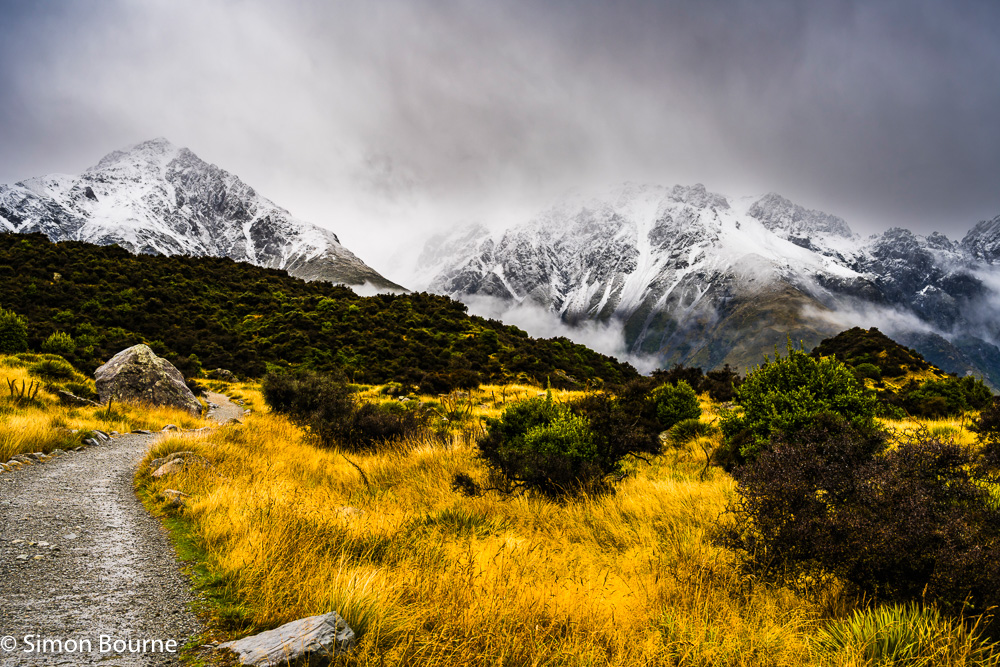
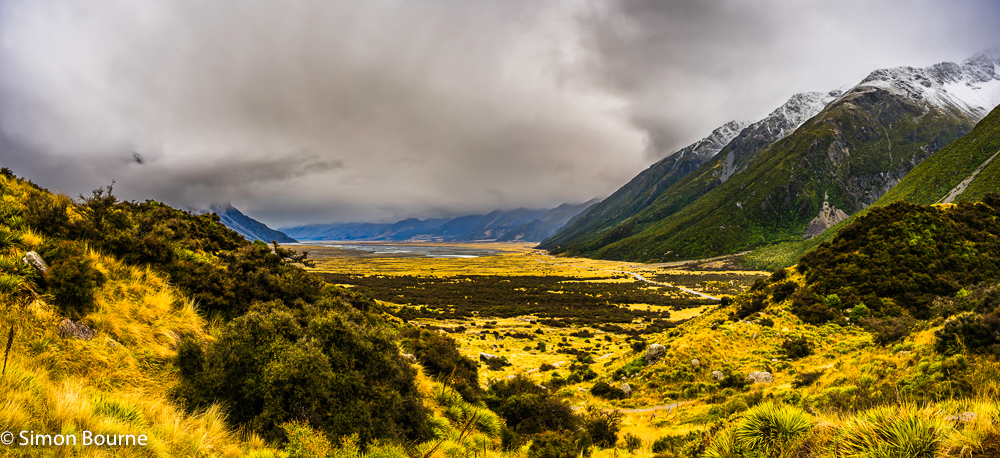
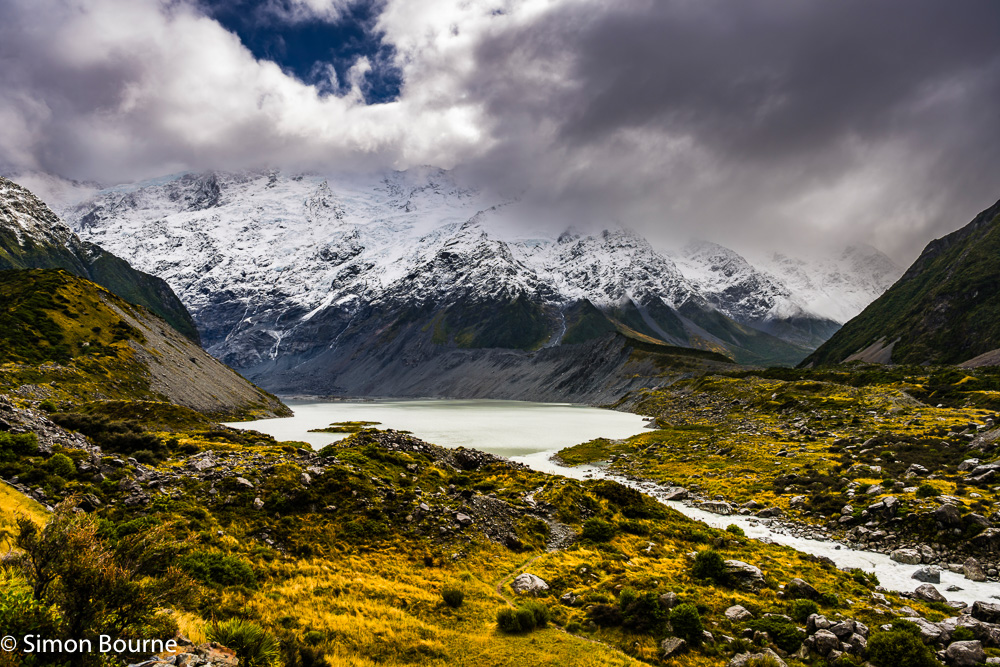
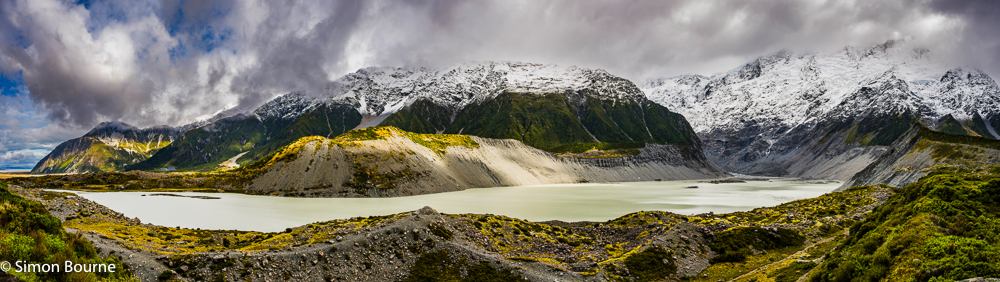
These two photos were taken in the Mount Cook area, as we walked up to the Tasman Glacier and Lake. It was very wet and stormy, and the first snow fall of the autumn had occurred overnight on the higher peaks around the Tasman valley. Both were taken on my full-frame mirrorless camera, the Nikon Z 7II, using the very versatile Z 24-120mm f/4 S lens, which is great for travel and landscape photography.
The first photo was at about 10am looking up towards the snowy mountain peaks at 35mm, using f/9, 1/125s and ISO 125. Surprisingly, even though it was very cloudy and overcast, the light was unusually bright at around EV 13, which is only two stops down from a sunny day. I love the contrast between the moody sky, the snowy mountains and the bright yellow autumnal grasses.
The second shot is a panorama looking back down the glaciated Tasman River and valley. This was formed from two 24mm images merged in Photoshop, and both taken using f/9, 1/100s and ISO 125. The beauty of this next generation of mirrorless lenses is that they maintain their sharpness throughout their zoom ranges, which was not always true of the F-mount DSLR lenses.